Email: [email protected]
Email: [email protected]
Telephone/WhatsApp: +86-18267909027
May 29, 2026
The idea is straightforward. A standard travel mug has one opening — a spout, a straw hole, or a flip-top positioned at a single point on the lid. A 360° lid opens up the entire rim, or uses a design that allows flow from any direction. You pick up the mug, bring it to your mouth, and drink. The geometry of how you're holding it doesn't matter.
This sounds like a small thing until you've done it a few dozen times without having to think about it. Then it starts to feel obvious — the way a lot of good design does once you're used to it.
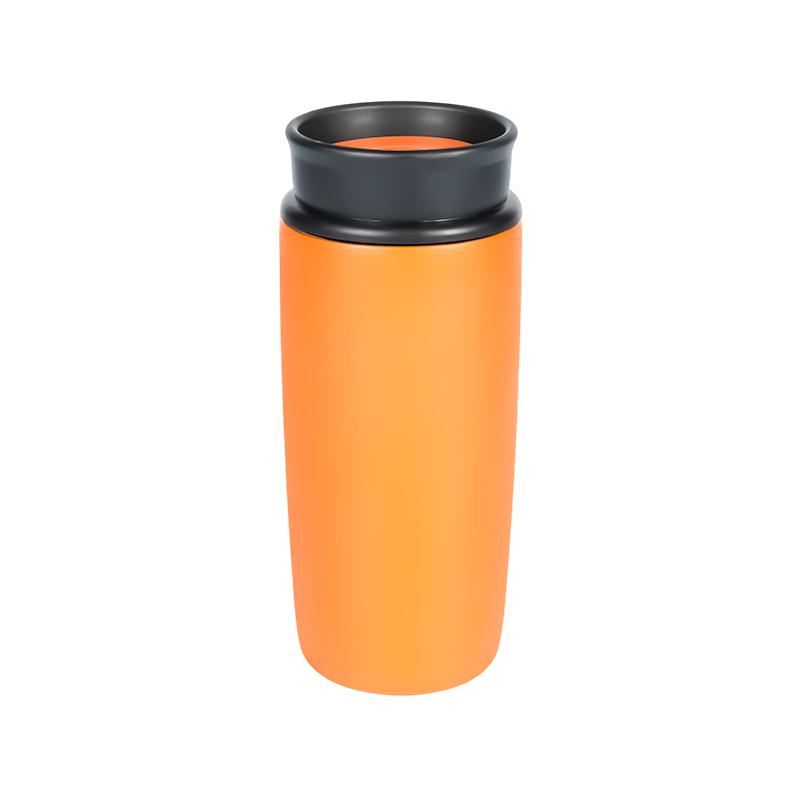
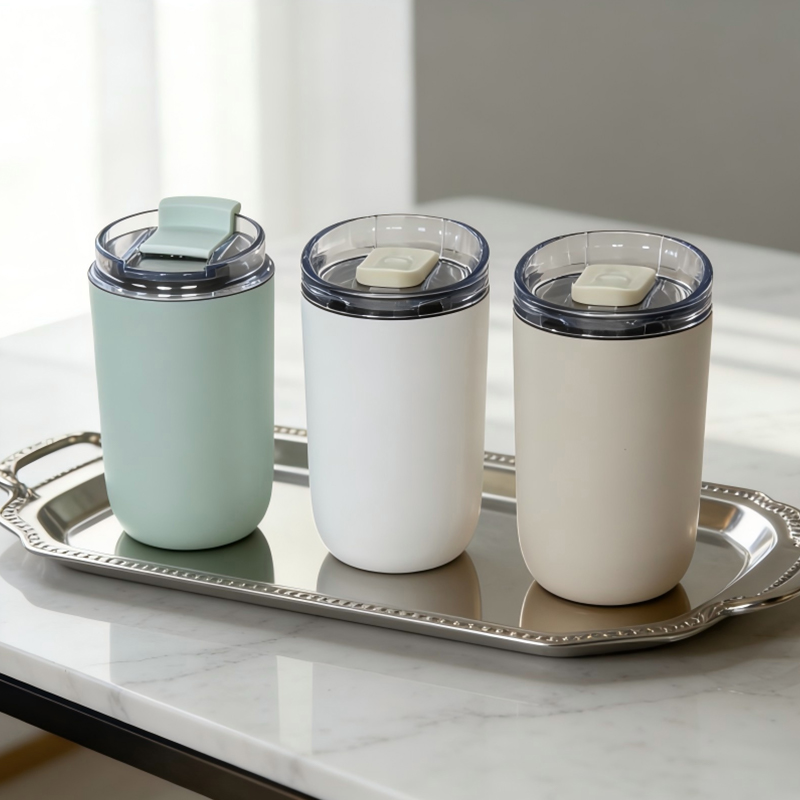
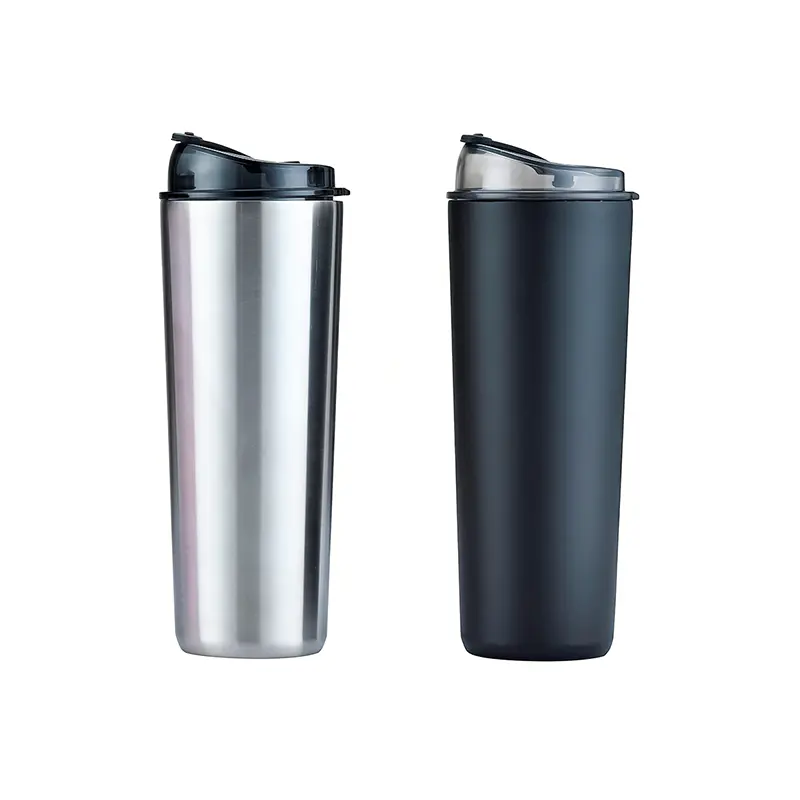
The 360° lid gets the attention, but the thermal part is what makes the mug worth carrying in the first place. A thermal mug with 360° drinking lid typically uses the same double-wall vacuum insulation you'd find in a well-made tumbler or travel bottle. Two stainless steel walls with a vacuum between them. Heat can't easily pass through, so your coffee stays warm, your iced drink stays cold, and you're not fighting against the temperature dropping by the time you reach your desk.
Vacuum insulation holds hot drinks at a drinkable temperature for roughly 6 to 8 hours, and cold drinks for longer — considerably better than a ceramic mug sitting on a desk, which cools noticeably within half an hour.
The honest answer is — most people who carry a drink while doing something else. Commuters are the obvious group. But it's also useful for anyone who drives, works at a standing desk and moves around, tends to grab their mug without looking, or just finds regular spout-based lids mildly annoying. People with limited hand mobility also find the 360° design genuinely easier to use, since there's no coordination required between hand position and lid orientation.
It's not for everyone. If you tend to drink at your desk and set the mug down between sips, a standard lid does the same job. But if your drink is moving with you, the difference is noticeable.
Not all 360° lids are built the same way. Some use a spring-loaded ring that opens when pressed against your lip and closes when you pull away. Others rely on a pressure seal that requires a slight tilt to activate. The spring-loaded versions tend to be more intuitive — you don't have to think about how you're drinking, which is sort of the whole point. The pressure seal types are often easier to clean, though, because they have fewer moving parts.
One thing worth checking: how well the lid seals when the mug is in a bag. A 360° lid that leaks when tipped sideways in a backpack is worse than no upgrade at all. Look for clear information about spill resistance at an angle, not just upright.
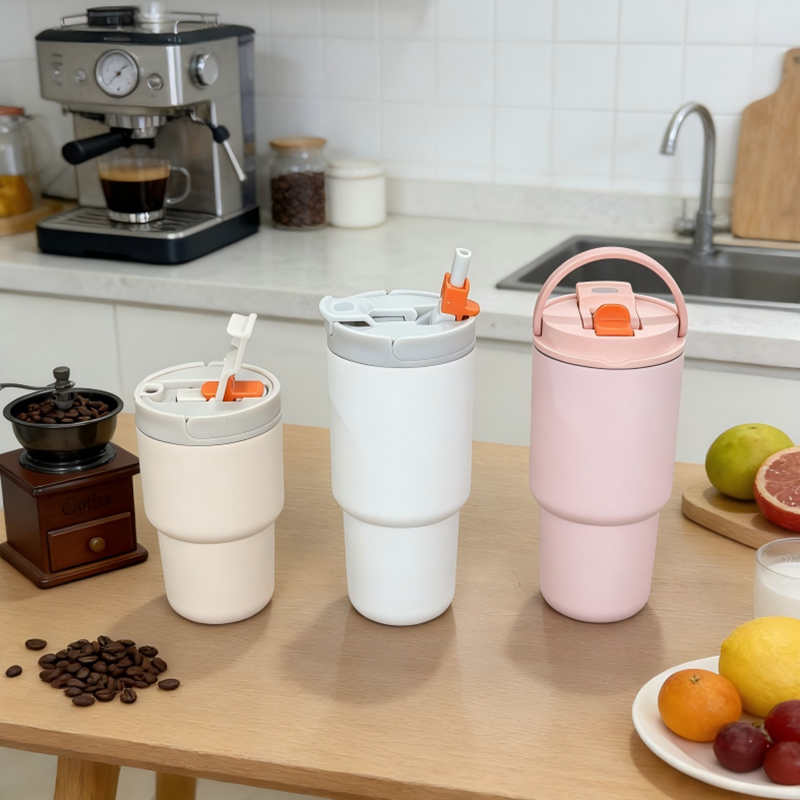
A thermal mug with 360° drinking lid isn't trying to be flashy. It sits in bags, rides on car consoles, and gets used so often that it fades into the background — which is exactly what good daily gear is supposed to do. The 360° lid removes a small but recurring point of friction. The insulation does what it's supposed to. And after a few weeks of use, going back to a mug where you have to find the spout every time starts to feel like a step backward.
Share:
Related Products
Free Consultation
PRODUCTS
CONTACT INFO.
+86-18267909027+86-159 5799 5961
+86-0579 87616809
No. 158, Mingzhao Road, Gangtou Industrial Zone, Wuyi County, Jinhua City, Zhejiang Province, 321200, China



 Español
 Français